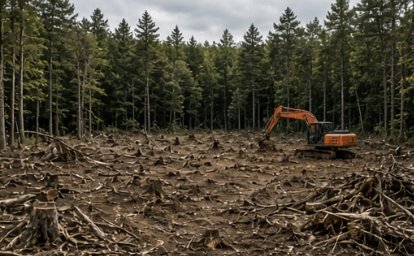
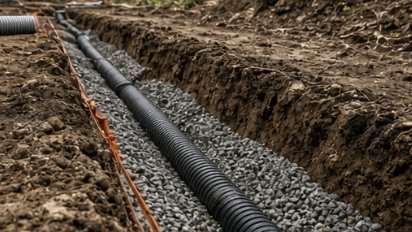
Ashland is a compact village on the Squam River with its own I-93 exit — a working town a few minutes from Little Squam’s camps and beaches. Our Ashland book mixes small village lots that need careful machine work with camp projects on the lake: foundation upgrades, utility trenches, driveway rebuilds, and drainage in river-valley soils.
Ashland works at two scales. In the village, lots are small and old — houses close together, short setbacks, sewer and water laterals of respectable age — so excavation means compact equipment, Dig Safe 811 marks studied carefully, and trench work done tight to structures without disturbing them. Out at Little Squam, it’s classic camp country: seasonal places on posts and piers converting to year-round, which brings full frost-depth foundations, water and power trenches, and Shoreland rules within 250 feet of the lake. The Squam River threading through town leaves sandy, workable soils on its terraces — pleasant digging, though low spots near the river want their drainage thought through and floodplain lines checked. Highway access is a genuine advantage; gravel and stone truck in cheap here. Fall remains our favorite Ashland season: dry ground, no posted roads, and camps empty for the winter work window.
Upgrading a Little Squam camp? Trench your utilities — water, power, and any future conduit — in one mobilization while the excavator is already on site for the foundation. Opening the same ground twice is the most common avoidable cost we see on camp conversions, and an empty spare conduit costs almost nothing to add.
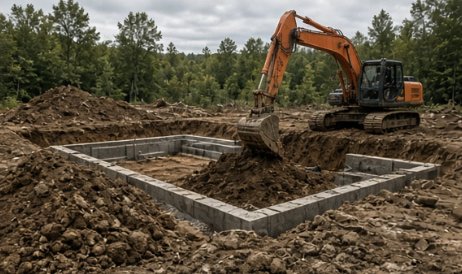
Foundations, pads, trenches, and grading — test pits first, flat quotes, on schedule.
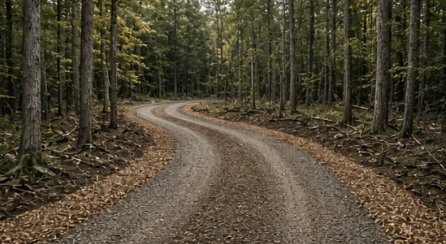
Gravel driveways built with real base and crown — and washouts fixed for good.
Free site walks, test pits before quotes, flat pricing, and a crew that knows Lakes Region ground.
Tell us where the property is and what you’re trying to do. We’ll walk the site, talk it through, and give you a straight, flat quote.
We reply to every request within 2 business hours.